Diabetes check (glucose)
Measures the sugar in your blood. Useful if you have symptoms such as thirst, tiredness or frequent urination, or a family history of diabetes. A fasting sample may be needed.

Know your numbers. Our rapid finger-prick tests give you a snapshot of key health markers in the pharmacy, with a pharmacist on hand to explain what the results mean and what to do next.
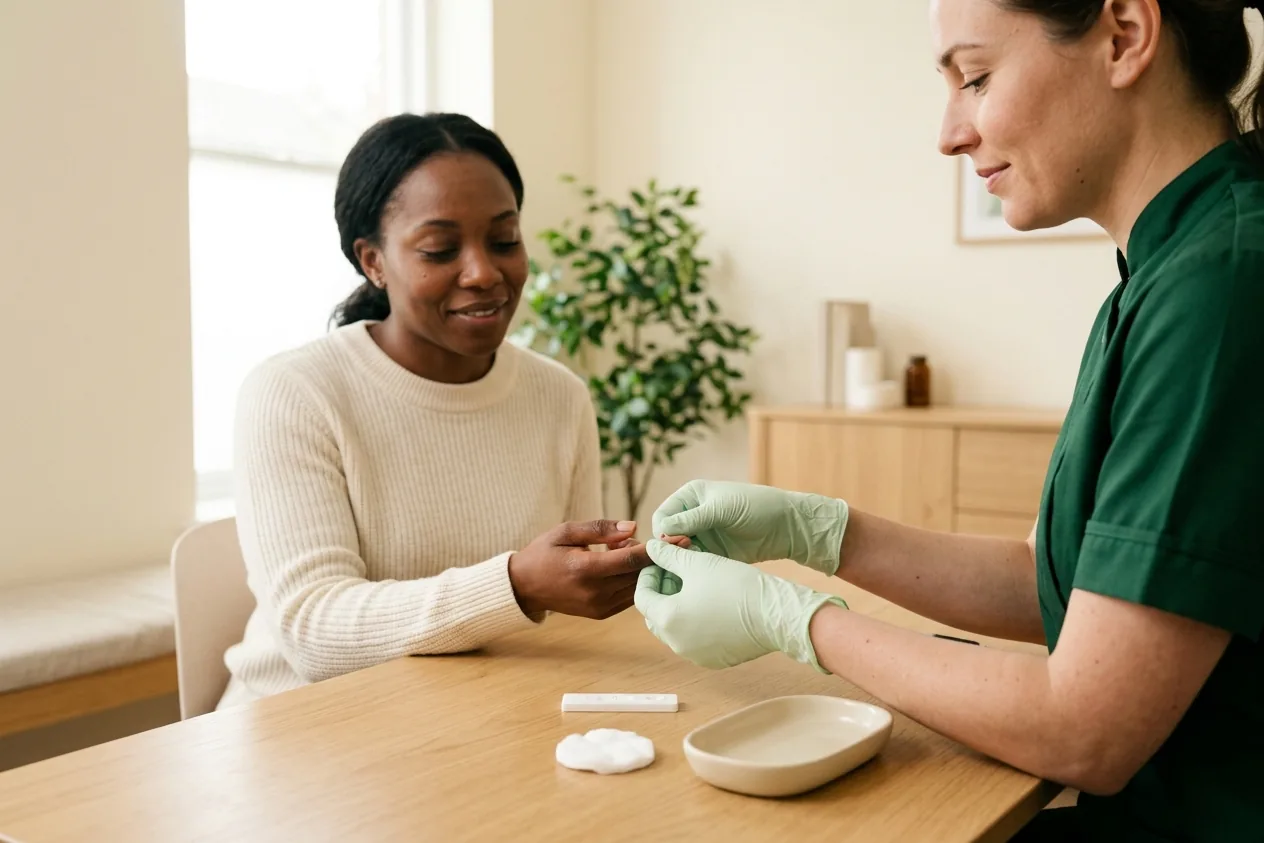
A finger-prick test needs only a few drops of blood and gives a result within minutes. It is a convenient way to keep an eye on your health, check the effect of lifestyle changes or find out whether something needs a closer look.
These tests are a useful guide, not a diagnosis. If a result is outside the expected range, your pharmacist will explain it and, where needed, recommend a follow-up with your GP and a laboratory test.
Every result is explained in plain English.
Your test and results stay between you and our team.
No waiting days for a lab. You leave with your answer.
Tailored lifestyle advice and, when needed, a recommendation to see your GP.
Measures the sugar in your blood. Useful if you have symptoms such as thirst, tiredness or frequent urination, or a family history of diabetes. A fasting sample may be needed.
Looks at total cholesterol, HDL (“good”), LDL (“bad”) and triglycerides, which are all linked to heart and circulatory health.
Checks your vitamin D level, important for bones, muscles and immunity, especially in the UK’s darker months.
Helps spot low iron, a common cause of tiredness, or too much iron in the body.
High levels are linked to gout and joint pain, and can be affected by diet, alcohol and some medicines.
Shows how your body uses oxygen during exercise. Often used by people who train regularly.
Measures ketones, relevant for people with diabetes who are unwell and for people following very low-carbohydrate diets.
Pick the test that fits your needs, or ask our pharmacist to recommend one.
We check relevant history, medicines and any symptoms.
A tiny sample of blood is taken and tested in the pharmacy.
We explain your result and agree your next steps.
Finger-prick tests are screening tools. Results outside the expected range should be confirmed by your GP, who may arrange a laboratory test.
Some tests, especially glucose and cholesterol, are more accurate when fasting. We will tell you what to do when you book.
They are good as a screening guide. If a result is borderline or abnormal, a laboratory test through your GP is the usual next step.
You will feel a quick pinprick on the side of your fingertip. Most people say it is barely noticeable.
The pharmacist will interpret your result and advise you. A diagnosis is made by your GP or a specialist.
This page is general information, not personal medical advice. For urgent advice call NHS 111; in an emergency call 999.
Choose a time that suits you, or call us on 01702 203233.